See which problems we propose to address, where we are investigating them, what needs to happen next and which resources are still required.
Portfolio status · Concept development These are proposed demonstrators. Exact sites, local baselines, delivery partners, maintenance owners, budgets and outcome targets are still being established. None is ready for funding review.
3Proposed demonstrators
7Mandatory readiness fields each
0Demonstrators ready for funding review
Portfolio reviewed: 15 October 2026. This is a published planning register, not a live operational tracker.
EXPLORE THE INITIAL PORTFOLIO
Find the place. Understand the need. See your role.
Choose a project to inspect its evidence, proposed schedule, required resources and unresolved decisions.
3 proposed demonstrators shown · all await field validation
No demonstrators match this selection.
D01 / WATERConcept · Field validation required
Community water reliability
Ramanathapuram, Tamil Nadu
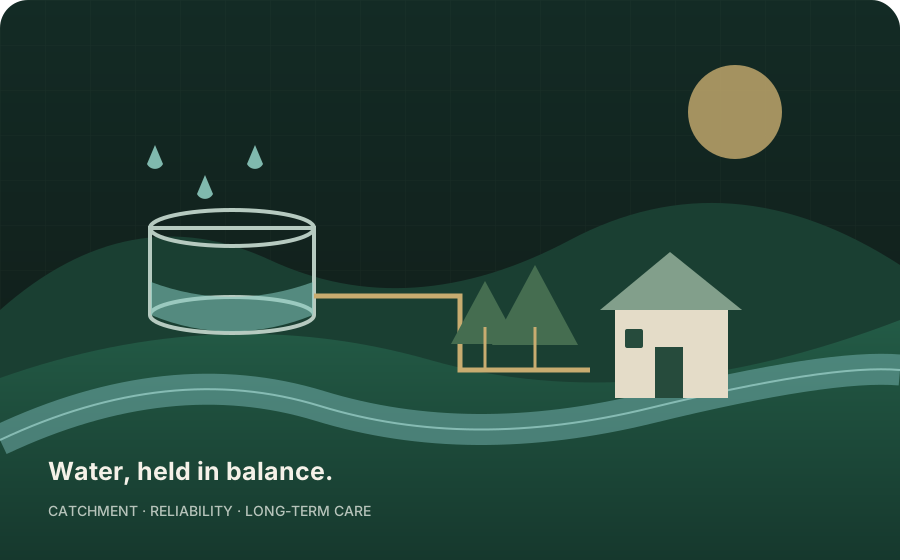
Concept illustration, not a site photograph or engineering design. Local assessment and intervention selection remain pending.
Regional drought exposure makes reliable water access a priority for investigation. The selected village, affected population and unmet local service gap still need confirmation.
Proposed action
Assess a connected village water system; compare demand management, repairs, source protection and suitable storage or recharge before selecting works.
What is confirmed?
Regional screening evidence is identified.
Exact site and local baseline are pending.
No appointed partner, maintenance owner or committed funding.
Next action: Select an actual village cluster and confirm permission to establish a local baseline.
Current stage
01 of 08 · Site selection pending
Next decision
Village selection and site-access permission
Accountable coordinator
Not assigned · contact POIGAI to discuss coordination
Target decision date
Not scheduled · depends on local participation and access
Published review
Decision gate
Proceed to baseline only after exact site and access are agreed
Seven readiness requirements · Not ready for funding review
Required field
Current evidence and remaining need
01 · Location
Ramanathapuram, Tamil NaduProposed geography — exact site pending
02 · Baseline
Regional drought research available. Local supply, demand, water-quality and seasonal measurements pending.Site evidence pending
03 · Unmet need
Seasonal safe-water reliability gap to be quantified with residents and existing service providers.Local gap unconfirmed
04 · Implementation partner
Local delivery organisation and qualified water specialist: not appointed.Not appointed
05 · Maintenance owner
Competent water-service or asset owner: not confirmed; written maintenance and operating-budget acceptance required.Not confirmed
06 · Costed design
Not costed. Requires site survey, options appraisal, technical design, quantities, current cost evidence and operating plan.Budget not established
07 · Measurable outcome
Proposed: days of reliable safe-water service and interruption days. Baseline value, numerical target and evaluation date pending.Target not agreed
Timeline · Proposed sequence and planning allowances
Preparation allowance: 6–12 weeks after site access and a funded assessment mandate. If works are selected, allow a provisional 3–6 months after approvals and funding; seasonal access and permits may change this. Outcome monitoring must cover relevant wet and dry conditions.
These are provisional POIGAI planning allowances, not surveyed estimates or contracted deadlines. Start date: not scheduled. Delivery dates will be set after site validation, permissions, partner acceptance and finance.
01Select the exact siteOpen now: region/city proposed; site and access pending.
02Establish the baselinePending: measurements, records and defined beneficiaries.
03Confirm the unmet needPending: local validation and existing-programme checks.
04Agree delivery and maintenancePending: named partners and written responsibilities.
05Complete the costed designPending: reviewed design, quantities and operating costs.
06Decide and secure financePending: readiness review and funding decision.
07Implement and monitorNot started: approvals and resources required first.
08Evaluate and maintainNot started: measure outcomes and sustain the asset/service.
Resources · People, assets, money and maintenance
Required resources below are open needs, not resources already secured. Budget: not costed. Funding commitments: none confirmed in this portfolio.
Local delivery and community participationVillage consultations, access, beneficiary definition and inventory of existing schemes.
Water and technical assessmentHydrogeology where relevant, water-quality testing, catchment assessment and costed options.
Operations and maintenanceNamed asset custodian, testing and maintenance schedule, skills and recurring budget.
Funding and equipmentAssessment, selected works, monitoring, maintenance and replacement costs. Amount and commitments not confirmed.
Choose your role and prepare a project-specific enquiry. No account is required.
D02 / HEATConcept · Field validation required
Heat-resilient institutions
Tiruchirappalli, Tamil Nadu
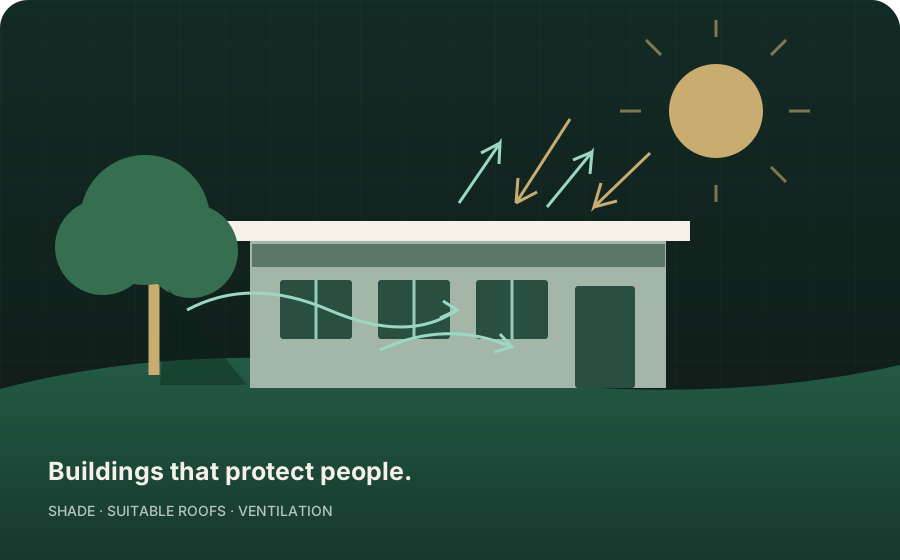
Concept illustration, not a site photograph or engineering design. Local assessment and intervention selection remain pending.
Published urban heat-risk mapping provides a basis for investigating exposed institutions. No school, health facility or workplace has been selected or thermally assessed.
Proposed action
Measure exposure during occupied hours, audit buildings and compare appropriate shading, ventilation and roof improvements with institutional preparedness.
What is confirmed?
Regional screening evidence is identified.
Exact site and local baseline are pending.
No appointed partner, maintenance owner or committed funding.
Next action: Identify candidate institutions using the heat-risk maps and obtain permission for thermal monitoring.
Current stage
01 of 08 · Site selection pending
Next decision
Institution selection and thermal-monitoring permission
Accountable coordinator
Not assigned · contact POIGAI to discuss coordination
Target decision date
Not scheduled · depends on local participation and access
Published review
Decision gate
Proceed to baseline only after exact site and access are agreed
Seven readiness requirements · Not ready for funding review
Required field
Current evidence and remaining need
01 · Location
Tiruchirappalli, Tamil NaduProposed geography — exact site pending
02 · Baseline
City heat-risk mapping available. Building temperature, humidity, occupancy, roof condition and energy baseline pending.Site evidence pending
03 · Unmet need
Excess occupied-hour heat exposure and gaps in existing protection must be established at the chosen institutions.Local gap unconfirmed
04 · Implementation partner
Building/cooling designer, qualified installer and local institution partner: not appointed.Not appointed
05 · Maintenance owner
Building owner or institution: not confirmed; upkeep, water access, monitoring and replacement duties must be accepted.Not confirmed
06 · Costed design
Not costed. Requires building inspection, suitable intervention specification, installation quantities, quotations and maintenance costs.Budget not established
07 · Measurable outcome
Proposed: occupied hours above a justified thermal threshold. Threshold, baseline, numerical target and measurement dates pending.Target not agreed
Timeline · Proposed sequence and planning allowances
Preparation allowance: 6–12 weeks after access and a funded assessment mandate, including a baseline in suitable weather. A selected retrofit may take a provisional 2–6 weeks after approval and funding. Evaluate during comparable occupied hot-weather periods; no installation or completion date is committed.
These are provisional POIGAI planning allowances, not surveyed estimates or contracted deadlines. Start date: not scheduled. Delivery dates will be set after site validation, permissions, partner acceptance and finance.
01Select the exact siteOpen now: region/city proposed; site and access pending.
02Establish the baselinePending: measurements, records and defined beneficiaries.
03Confirm the unmet needPending: local validation and existing-programme checks.
04Agree delivery and maintenancePending: named partners and written responsibilities.
05Complete the costed designPending: reviewed design, quantities and operating costs.
06Decide and secure financePending: readiness review and funding decision.
07Implement and monitorNot started: approvals and resources required first.
08Evaluate and maintainNot started: measure outcomes and sustain the asset/service.
Resources · People, assets, money and maintenance
Required resources below are open needs, not resources already secured. Budget: not costed. Funding commitments: none confirmed in this portfolio.
Institution and local participationAccess to buildings and occupancy records; consultation with staff and affected users.
Building and monitoring specialistsThermal logging, roof and ventilation audit, retrofit specification and quality review.
Maintenance and institutional responseWritten building-owner acceptance, roof upkeep, heat-response arrangements and follow-up.
Funding and materialsAssessment, suitable retrofit, sensors, installation, maintenance and evaluation. Amount and commitments not confirmed.
Choose your role and prepare a project-specific enquiry. No account is required.
D03 / AGRICULTUREConcept · Field validation required
Dryland farm resilience
Anantapur dryland region, Andhra Pradesh
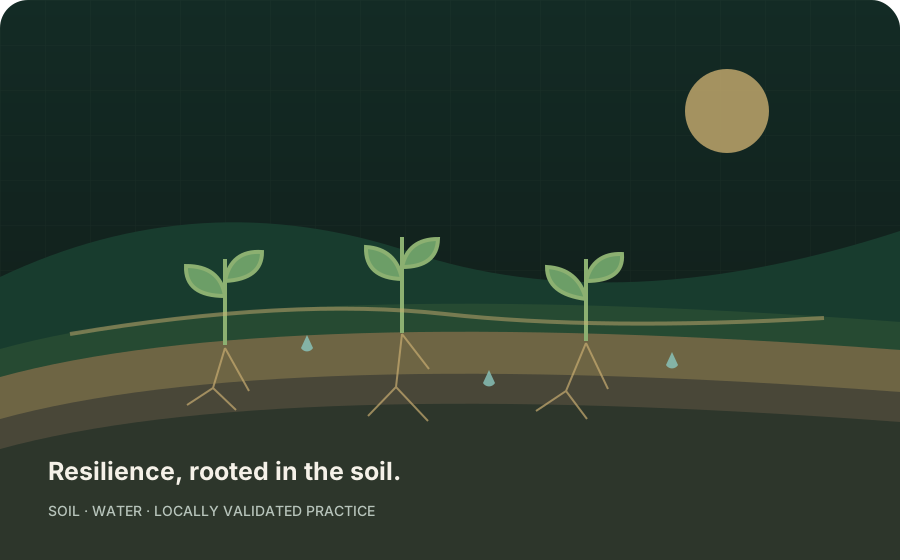
Concept illustration, not a site photograph or engineering design. Local assessment and intervention selection remain pending.
Historical agricultural contingency planning documents delayed rainfall and dry-spell risks. Current administrative boundaries, farms, crop conditions and gaps in existing support need verification.
Proposed action
Work with a comparable farmer group to assess crop-stage risks, trial locally validated soil-water and crop-contingency measures, and monitor production stability and net income.
What is confirmed?
Regional screening evidence is identified.
Exact site and local baseline are pending.
No appointed partner, maintenance owner or committed funding.
Next action: Select the current mandal and farmer cluster, reconcile historical boundaries and obtain baseline records.
Current stage
01 of 08 · Site selection pending
Next decision
Current mandal, farmer-cluster selection and consent
Accountable coordinator
Not assigned · contact POIGAI to discuss coordination
Target decision date
Not scheduled · depends on local participation and access
Published review
Decision gate
Proceed to baseline only after exact site and access are agreed
Seven readiness requirements · Not ready for funding review
Required field
Current evidence and remaining need
01 · Location
Anantapur dryland region, Andhra PradeshProposed geography — exact site pending
02 · Baseline
Historical ICAR-CRIDA planning evidence available. Current multi-season farm, rainfall, yield, input-cost, income and water-source records pending.Site evidence pending
03 · Unmet need
Weather-related production and income instability, plus the remaining gap in extension or scheme support, must be quantified.Local gap unconfirmed
04 · Implementation partner
Capable FPO or farmer organisation and local agronomic/extension expertise: not appointed.Not appointed
05 · Maintenance owner
Named farmer/FPO owners for each individual or shared asset and recurring advisory function: not confirmed.Not confirmed
06 · Costed design
Not costed. Requires locally validated trial design, inputs, labour, equipment utilisation, water budget, advisory and evaluation costs.Budget not established
07 · Measurable outcome
Proposed: weather-related crop losses and net farm income. Baselines, numerical targets, comparison approach and evaluation dates pending.Target not agreed
Timeline · Proposed sequence and planning allowances
Preparation allowance: 6–12 weeks after farmer consent and a funded assessment mandate. Trials must follow the locally agreed sowing calendar; a proposed two-season learning window requires agronomic review. Funding delays may move implementation to a later crop season.
These are provisional POIGAI planning allowances, not surveyed estimates or contracted deadlines. Start date: not scheduled. Delivery dates will be set after site validation, permissions, partner acceptance and finance.
01Select the exact siteOpen now: region/city proposed; site and access pending.
02Establish the baselinePending: measurements, records and defined beneficiaries.
03Confirm the unmet needPending: local validation and existing-programme checks.
04Agree delivery and maintenancePending: named partners and written responsibilities.
05Complete the costed designPending: reviewed design, quantities and operating costs.
06Decide and secure financePending: readiness review and funding decision.
07Implement and monitorNot started: approvals and resources required first.
08Evaluate and maintainNot started: measure outcomes and sustain the asset/service.
Resources · People, assets, money and maintenance
Required resources below are open needs, not resources already secured. Budget: not costed. Funding commitments: none confirmed in this portfolio.
Farmer organisation and consentComparable farmer cluster, plot access, available crop records and existing-programme inventory.
Agronomy and evaluationCurrent crop advice, soil-water assessment, trial protocol and defensible comparison design.
Asset and service ownershipNamed responsibility for shared equipment, irrigation limits, maintenance and recurring advisories.
Funding and farm resourcesAssessment, agreed trials, inputs, advisory support and multi-season monitoring. Amount and commitments not confirmed.
Evidence varies in age and geographic resolution. Historical district boundaries, current hazards, existing investments and local priorities must be checked before site selection.
THE READINESS STANDARD
Seven fields. Evidence before funding review.
Every demonstrator needs an exact location, a measured baseline, a confirmed unmet need, an appointed implementation partner, a named maintenance owner, a costed design and an outcome with an agreed target and deadline.
All seven must be verified, with critical permissions and technical issues resolved, before a dossier is presented as ready for funding review. Passing this gate does not guarantee funding or impact.